Ditch the Script: Why Australia's Cleverest Punters Are Building Sessions Around Feel, Not Formula

There's a certain type of Aussie punter who walks into a session — whether it's at the kitchen table with a laptop and a cold one, or parked on the couch after a long arvo — armed with a laminated betting system they found on a forum in 2019. Bless them. They've got discipline. They've got commitment. They've also got about as much flexibility as a folding chair at a rodeo.
The smarter crew? They've quietly binned the rulebook. Not because they're reckless — quite the opposite. They've figured out that the most powerful tool in any casino session isn't a progressive staking chart. It's knowing yourself, reading the moment, and being willing to adapt on the fly.
Welcome to the world of adaptive session planning — and trust us, once you see it, you can't unsee it.
The Problem With Playing It 'Safe'
Here's the thing about so-called safe bets: they assume consistency. They assume you're the same player at 7pm on a Friday as you are at 11am on a Tuesday. They assume the game you're playing is behaving the same way it did last week. And they assume your bankroll, your mood, your energy, and your goals are all perfectly static.
Spoiler: none of that is true.
Rigid systems — your Martingales, your flat-betting-forever approaches — have their place. But treating them as gospel means you're essentially playing someone else's session. You're following a script written for a hypothetical player in a hypothetical situation that probably doesn't match yours right now.
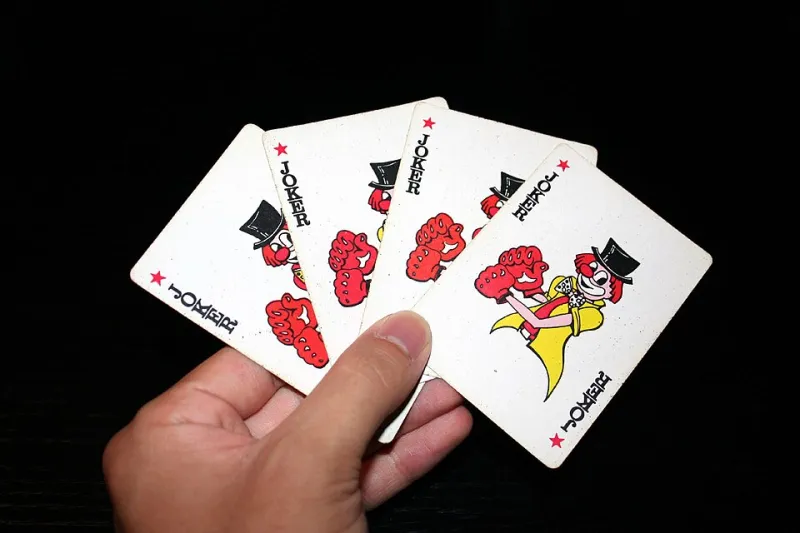
Seasoned Aussie players have started calling this 'ghost betting' — going through the motions of a strategy without ever actually engaging with the reality in front of them. The Joker, as any good JokaRoom regular will tell you, doesn't respect scripts. He deals in surprises.
The Three Levers: Time, Mood, and Game Dynamics
Adaptive session planning isn't chaos — it's structured flexibility. The best players we've spoken to tend to manage three distinct variables throughout any given session.
Time is the most underrated of the three. How long do you actually have to play? Not how long you want to play — how long before life intervenes? A 45-minute window calls for a completely different approach than a two-hour Sunday session. Short windows might mean tighter bet sizing and faster pivots. Longer sessions allow for patience, for riding out variance, for letting the game come to you.
Mood is the one most players refuse to admit matters. But it absolutely does. Walking into a session already frustrated — after a rough day at work, after a heated argument, after your footy team got belted by 60 points — is a psychological trap. Emotional states affect decision-making, and anyone who thinks they're immune is kidding themselves. The adaptive player checks in with their own headspace before a single bet is placed. If the read is 'not great,' that's information. Maybe it's a short, low-stakes session. Maybe it's not a session at all.
Game dynamics are the real-time element that most rigid systems completely ignore. Pokies behave differently across different periods of a session — volatility patterns shift, bonus features cluster or go cold, your gut starts picking up rhythms your conscious brain hasn't registered yet. Good players notice. They don't necessarily act on every twitch, but they're paying attention rather than mechanically repeating the same bet regardless of what the game is telling them.
Knowing When to Escalate, Retreat, or Pivot
Here's where it gets interesting — and where adaptive session planning separates itself from just 'winging it.'
Escalation isn't recklessness. There are genuine moments in a session where conditions align: you're sharp, the game is responding, your bankroll has breathing room. Knowing how to press that advantage — carefully, with a ceiling in mind — is a skill. It's not chasing losses. It's recognising a window and making a considered move through it.
Retreat, on the other hand, takes more guts than most players give it credit for. Cutting a session short when the conditions aren't right — when you're down, tired, or the game has gone cold — feels like quitting. It isn't. It's resource management. The session you don't play badly is just as valuable as the session you play well. Aussie punters who've internalised this tend to last a lot longer in the game overall.
The pivot is the wildcard move — switching games entirely when what you're playing isn't working. Not because you're tilting, but because a calculated reassessment tells you your current game isn't the right fit for this session. Maybe you started on a high-volatility pokie and the variance is chewing through your stack faster than intended. Maybe a table game would give you more control right now. The ability to pivot without ego is a genuine edge.
The Session as a Puzzle
Here's the mental model that seems to work best for adaptive players: treat every session as a unique puzzle rather than a recurring routine.
A puzzle has a specific shape. It has constraints. It responds to how you engage with it. You can't solve Tuesday's puzzle the same way you solved Saturday's, because they're different puzzles. The pieces look similar, but the picture is different.
This framing also removes some of the emotional weight that tanks a lot of players. If a session doesn't go your way, it's not a failure of your system — it's a puzzle you didn't crack this time. That's fine. The Joker shuffles the deck fresh every time.
What you can carry forward is the meta-skill: the ability to read the room, read yourself, and make better decisions with imperfect information. That compounds over time in a way that no fixed staking plan ever will.
Practical Ways to Start Adapting
If you're ready to move beyond the laminated chart, here are a few entry points:
- Set session parameters before you start — duration, budget, and a quick honest mood check. Thirty seconds of self-awareness before you log in is worth a lot.
- Build in a mid-session review — at roughly the halfway point of your planned time, pause and assess. Are you up or down? How's your focus? Does the game still feel right? Adjust accordingly.
- Define your pivot triggers in advance — decide before the session under what circumstances you'd switch games or call it early. Having these pre-set removes the emotional decision-making in the moment.
- Keep loose notes — not obsessive data tracking, just a quick note after each session about what worked, what didn't, and how you were feeling. Patterns emerge faster than you'd think.
The Joker Always Has Another Card
The beauty of adaptive session planning is that it respects the fundamental truth of casino gaming: you can't control outcomes, but you can absolutely control your process. The Joker's going to do what the Joker does — deal unexpected hands, throw in the occasional wild card, keep things interesting.
Your job isn't to predict the next card. It's to be in the best possible position — mentally, financially, strategically — to respond to whatever gets dealt.
Aussie punters who've made this shift don't describe it as a strategy so much as a mindset. And mindsets, unlike systems, travel with you across every game, every session, every hand.
Not bad for ditching a laminated chart.