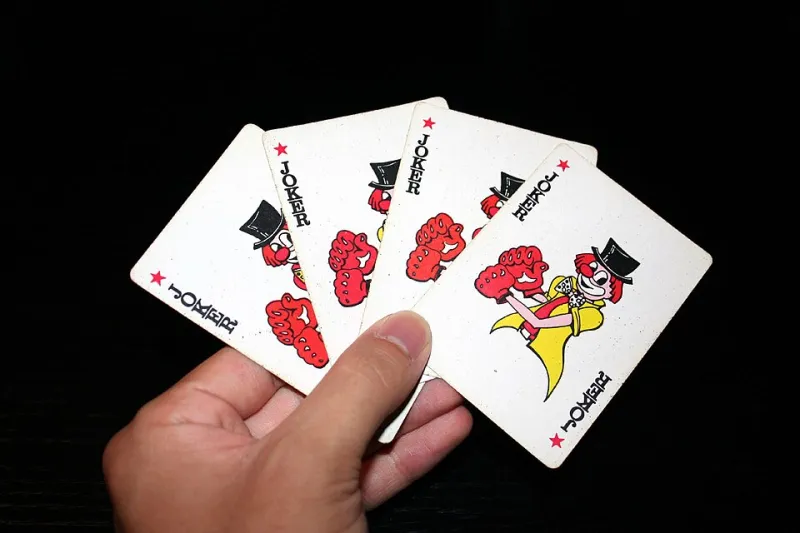
Clocking the Joker: How Smart Aussie Players Are Finding Their Winning Rhythm

There's a bloke in every pub — or these days, every online casino lobby — who swears the pokies "run hot" right after someone's walked away empty-handed. There's also a woman who refuses to touch a blackjack table before her second coffee. And somewhere in between those two characters lives a genuinely useful truth: timing matters in casino gaming, just not for the reasons most people think.
At JokaRoom AU, we're big believers in playing smarter rather than just playing harder. So let's pull back the curtain on game cycles, session patterns, and why understanding your own rhythms at the virtual felt could be the most underrated edge in your entire arsenal.
What a "Game Cycle" Actually Means (And What It Doesn't)
First, a quick myth-bust before we get into the good stuff. Online pokies — and most casino games — operate on Random Number Generators, or RNGs. Every spin is mathematically independent of the one before it. The machine doesn't "remember" that it just paid out, and it certainly isn't warming up for a big win just because you've been patient.
So when experienced players talk about game cycles, they're not describing some mystical warm-up phase baked into the software. What they are describing is something more behavioural and statistical: the observable patterns in how Return to Player (RTP) percentages express themselves over large sample sizes, and how player behaviour intersects with those distributions.
In practical terms, a pokie with a 96% RTP will trend toward that figure across hundreds of thousands of spins. In your individual session of 200 spins? You're operating inside a much noisier slice of variance. Understanding that distinction is genuinely powerful — because it stops you from chasing losses in a "cold" session and stops you from over-betting in a "hot" one.
The Psychology Behind Feeling Like You're "In the Zone"
Here's where things get interesting, and a little bit uncomfortable. Research into gambling behaviour consistently shows that players perform better — make calmer, more rational decisions — during specific windows of their session. The first 20 to 30 minutes tend to be the sharpest. You're fresh, your bankroll is intact, and you haven't yet accumulated the cognitive fatigue that leads to impulsive bet sizing.
As sessions drag past the 90-minute mark, something shifts. Concentration dips. The sunk-cost fallacy starts whispering. Suddenly a bet that would've seemed reckless at the start feels like a "recovery play." This isn't weakness — it's neuroscience. Decision fatigue is real, it affects everyone, and the savviest Aussie players have learned to set hard session limits before they sit down, not after they've already felt the pinch.
This is the Joker's real timing trick: knowing when to deal yourself out.
Platform Traffic and What It Means for Your Experience
Here's a layer of timing strategy that almost nobody talks about: platform traffic patterns. Online casinos experience genuine peak and off-peak periods, and while this doesn't affect RNG outcomes, it absolutely affects the quality of your experience — which in turn affects your decision-making.
During peak hours (think Friday nights, Sunday afternoons, and the post-footy rush), you're competing for customer support bandwidth, potentially dealing with slower load times on live dealer tables, and playing alongside a higher volume of emotionally charged punters in chat environments. None of that directly changes your odds, but it can subtly pressure your play.
Off-peak sessions — early mornings, mid-week afternoons — tend to be calmer, more deliberate affairs. If you're the type of player who gets caught up in the energy of a busy lobby, scheduling your sessions during quieter windows could help you stay disciplined. Think of it as choosing a quiet café over a noisy food court to read a contract. Same contract, very different outcome.
Building Your Personal Session Blueprint
The most consistent performers in online casino gaming — the ones who manage their bankrolls over months and years rather than burning through them in a weekend — almost universally have some version of a personal session blueprint. Here's what that looks like in practice:
Set a session clock, not just a budget. Decide in advance that you're playing for 45 minutes, full stop. When the clock's up, the session ends — whether you're up, down, or exactly where you started. This removes the "just one more spin" trap entirely.
Track your own hot and cold patterns. Not the game's — yours. Keep a simple log of what time of day you played, how long the session ran, and whether you made good decisions throughout. Over a few weeks, patterns emerge. Some players are sharper in the morning; others hit their stride mid-afternoon. Finding your personal peak window is a genuine edge.
Match game volatility to your session length. High-volatility pokies — the ones with massive jackpot potential but long dry spells — are better suited to longer, better-funded sessions where variance has room to breathe. Low-volatility games, with their frequent smaller payouts, are ideal for shorter sessions where you want to stay engaged without bleeding your bankroll waiting for a big hit.
Build in mandatory breaks. Seriously. A five-minute break every 30 minutes isn't a sign of weakness — it's a performance tool. Step away, grab a glass of water, and return with fresh eyes. You'll make noticeably better decisions, and you'll enjoy the whole experience more.
When the Joker Deals You a Rough Hand
Every player hits losing streaks. The question isn't whether they'll happen — it's whether you've structured your sessions so a rough run doesn't turn into a catastrophe. Understanding game cycles helps here too: when you're deep in a variance trough, the statistically sound move is almost always to step back, not to double down in pursuit of a "correction."
The RNG doesn't owe you a comeback. But your future self will thank you for the discipline.
The Bottom Line
Timing in casino gaming isn't about superstition or mystical hot streaks. It's about understanding variance, respecting your own cognitive limits, and structuring your sessions with the same intentionality you'd bring to any serious pursuit. The players who consistently get the most out of their gaming — in enjoyment and in outcomes — are the ones who treat timing as a strategy, not an afterthought.
The Joker's always had impeccable timing. Now you do too.