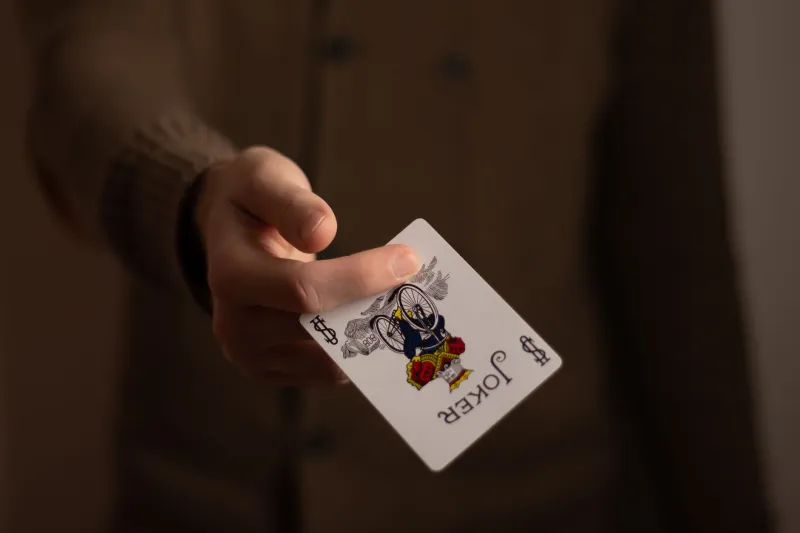
Step Away to Stay Ahead: Why Smart Aussie Players Treat Breaks Like a Secret Weapon

There's a particular kind of stubbornness that lives in every Australian gambler's DNA. It's the same spirit that keeps a bloke at the barbie long after the snags have gone cold, or convinces someone to stay for "just one more" at the local. In the world of online casino play, that tenacity can be a genuine asset — right up until the moment it becomes your biggest liability.
Because here's the thing the Joker doesn't advertise on the tin: the longer you sit at the virtual felt without a proper break, the less of yourself you're actually bringing to the game. Your bankroll might stay the same, but your brain? That's quietly going broke.
At JokaRoom AU, we've watched enough player patterns to know that the difference between a session that turns around and one that falls apart isn't always the cards — it's the person holding them. And more often than not, the smartest move that person can make is to temporarily stop playing entirely.
Your Brain on a Losing Streak
Let's get into the science for a second, because it's genuinely fascinating — and a little bit alarming.
When you've been playing for an extended stretch, particularly through a rough patch, your prefrontal cortex — the part of your brain responsible for rational decision-making, impulse control, and risk assessment — starts to underperform. Researchers call this decision fatigue, and it's the cognitive equivalent of running your phone battery down to three percent. Everything slows, heats up, and starts making weird choices.
In practical terms, this means you're more likely to chase losses, abandon a solid strategy, increase bet sizes without a logical reason, or convince yourself that a run of bad luck is "due" to flip. None of those are good looks. All of them are symptoms of a brain that needs a reboot, not another spin.
The kicker? Most players in this state don't feel impaired. They feel certain. That overconfidence is the fatigue talking — and it's laughing all the way to the house's ledger.
Reading the Signals Before the Wheels Fall Off
The trick to using breaks strategically is catching yourself before you hit the wall, not after you've already driven through it.
Some of the classic warning signs that your mental deck needs reshuffling:
- You're narrating your losses out loud. If you're having a full-blown conversation with your screen, mate, the screen isn't listening — but your subconscious is, and it's getting wound up.
- Your bet sizing is drifting upward without a plan. A gradual, unintentional creep in stakes is a classic fatigue signal. You're trying to solve an emotional problem with a financial tool.
- You've forgotten what your session goal was. Did you set a win target? A loss limit? If those feel like ancient history, you've been playing on autopilot for too long.
- You're annoyed at the game itself. When a random number generator starts feeling personal, that's your cue to stand up, stretch, and go make a cup of tea.
None of these are signs of weakness. They're signs of being human. The players who outperform over time aren't the ones who never feel these things — they're the ones who've learned to spot them early.
The Cognitive Reset: What Actually Happens When You Step Away
Here's where it gets genuinely interesting. A proper break — and we're talking a real one, not just switching tabs to check the footy scores — triggers a measurable shift in your mental state.
Even ten to fifteen minutes away from the screen, ideally involving some physical movement, a glass of water, and zero screen time, allows your prefrontal cortex to partially recover. Stress hormones that have been quietly spiking during a rough run begin to normalise. The emotional fog that was distorting your risk perception starts to lift.
When you return, you're not quite the same player who left. You're a slightly sharper, slightly calmer version — one who can look at their session with fresh eyes rather than through the tunnel vision of someone who's been grinding for two hours straight.
Think of it like the half-time break in a footy match. The team that comes out of the sheds with a new game plan, having genuinely reset, almost always outperforms the one that just ran back on with the same tired strategy and a bit more sweat.
Building Breaks Into Your Session Architecture
The best Aussie players we see at JokaRoom don't wait until they're desperate to take a break — they schedule them in advance, like a tradie who books their smoko before the job starts rather than when they're already exhausted.
A few approaches worth stealing:
The Time-Block Method: Set a firm timer for 45 to 60 minutes. When it goes off, step away for at least 10 minutes regardless of where you are in the session. Won a bunch? Good — walk away and let it settle. Down a bit? Even better reason to reset before you start chasing.
The Milestone Marker: Decide before you start that you'll take a break after reaching a certain number of spins, hands, or a particular bankroll movement — up or down. This removes the emotional negotiation from the decision entirely.
The Ritual Reset: Build a short, consistent routine around your breaks. Same drink, same stretch, same two minutes outside if you can manage it. The ritual itself becomes a psychological signal that you're genuinely resetting, not just pausing.
The common thread across all of these? The break is planned, not reactive. You're not running away from a bad session — you're engineering a better one.
The Comeback Equation
Here's what nobody in the casino world talks about enough: some of the best session turnarounds aren't the result of a hot streak arriving out of nowhere. They're the result of a player returning to the table with a clearer head and immediately making better decisions — decisions that were available to them before the break, but invisible through the fog of fatigue.
The Joker, as any JokaRoom regular knows, deals in surprises. Sometimes that surprise is a well-timed wild card in your favour. But sometimes the wildest card in the deck is the one you play yourself — the decision to stop, breathe, and come back as the player you were at the start of the session rather than the depleted version you'd become.
Rest isn't retreating. It's reloading.
And in a game where the house always has a mathematical edge, every cognitive advantage you can manufacture for yourself is worth protecting. Your brain is the one asset in this equation that genuinely improves with care — so treat it accordingly.
Now go make that cuppa. The reels will still be there when you get back.