Cracking the Code Behind the Cards: How Sharp Aussie Players Are Decoding Online Game Patterns
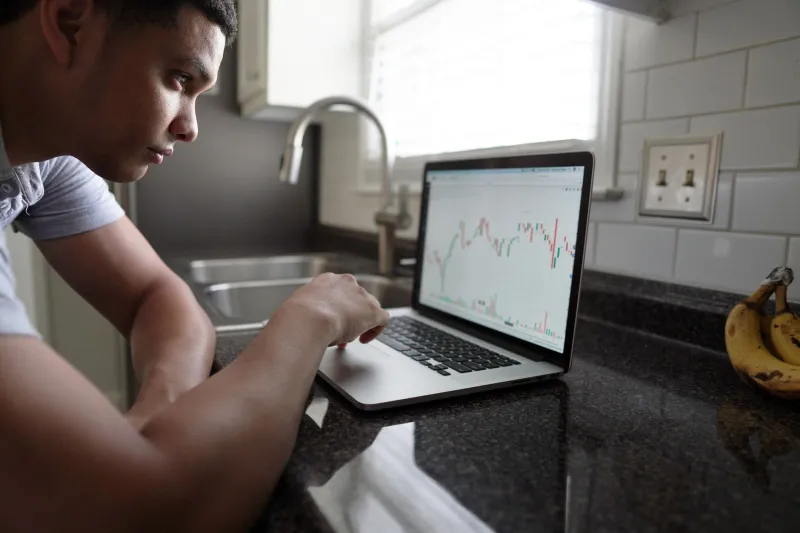
There's a certain type of Aussie casino player you've probably met — maybe at a backyard barbie, maybe in a JokaRoom chat thread at half past eleven on a Tuesday. They're not the loudest person in the room. They don't bang on about their lucky number or insist that wearing their AFL team's jersey improves their spin outcomes. Instead, they're quietly watching. Counting. Noticing things.
They're reading the algorithm like a poker face, and increasingly, they're coming out ahead.
This isn't about cracking some secret code or outsmarting the house with a tin-foil-hat conspiracy theory. It's about genuine data literacy — understanding how online games actually behave, and using that knowledge to make smarter decisions about when to play, how much to stake, and when to walk (or log off) gracefully.
The Algorithm Isn't a Villain — But It's Not Your Mate Either
Let's get one thing straight from the jump: every legitimate online casino game, including the cracking range you'll find at JokaRoom AU, runs on a Random Number Generator (RNG). That's a sophisticated piece of software that ensures every spin, every card draw, every dice roll is statistically independent from the one before it.
So why do players swear they can "feel" a game warming up? Why does it sometimes seem like a pokie is due for a big hit after a cold run?
Here's the thing — they're not entirely wrong to notice patterns, but they're sometimes wrong about what those patterns mean. The RNG doesn't have memory. But the statistical distribution of a game's outcomes over a large enough sample? That follows predictable mathematical principles. And that's where things get genuinely interesting.
Volatility Windows and What They Actually Tell You
Every online pokie has a volatility rating — high, medium, or low — and this single characteristic tells you more about your session experience than almost anything else. High-volatility games are the drama queens of the casino floor. They'll go cold for ages, then absolutely explode. Low-volatility games are the steady Eddies: smaller, more frequent wins that keep your balance ticking over.
Savvy players are learning to match volatility to their bankroll and their mood. Sitting down with $50 and jumping straight onto a high-volatility pokie is a bit like showing up to a marathon in thongs — technically possible, but you're going to have a rough time.
The smarter play? Treat your session like a tactical decision. If you've got a modest bankroll and you want longevity, a medium-volatility game gives you the best balance of entertainment and staying power. If you've budgeted for a bigger session and you're genuinely comfortable riding out variance, then a high-volatility title with a juicy RTP makes more mathematical sense.
Timing Cycles: The Myth, the Math, and the Middle Ground
Now here's where it gets a little philosophical. Some players — particularly those who've been around the virtual tables long enough to build a decent data set — claim they've identified timing patterns in online games. Not magical hot streaks, but genuine statistical clusters that emerge when you track your sessions over weeks or months.
Is this real? Partly.
What these players are actually observing is the natural variance distribution of an RNG-based system. Over a large number of spins, any game will produce clusters of wins and clusters of losses — not because the algorithm is sentient, but because randomness itself isn't perfectly smooth. It clumps. It bunches. That's just how probability works in the real world.
The psychological trap — and it's a sneaky one — is confusing the observation of variance with the ability to predict it. Noticing that you've hit three dry sessions in a row doesn't mean a big win is "due." What it might mean, if you've kept honest records, is that your session timing, stake sizing, or game selection has been slightly off. That's actually useful information.
Keeping Honest Records: The Habit That Separates the Sharp from the Sloppy
Ask any serious Aussie punter what their single best habit is, and the ones worth listening to will tell you the same thing: they write stuff down.
Not obsessively. Not in a way that turns a fun hobby into a homework assignment. But enough to build a genuine picture of their own play. Which games have treated them well over time? Which ones consistently eat their bankroll? What stake levels feel comfortable versus stressful? What time of day do they make their best decisions?
This kind of journaling isn't about finding a magic formula — it's about knowing yourself as a player. The Joker might deal the cards, but you're still the one deciding how to play your hand.
Simple tools work fine. A notes app on your phone, a basic spreadsheet, even a paper notebook if you're old school. Track your starting balance, your ending balance, the game you played, and a quick note on how the session felt. Over time, you'll start seeing your own patterns emerge — and some of them will genuinely surprise you.
The Psychology of Pattern Recognition: Friend and Foe
Human brains are pattern-recognition machines. It's one of our greatest evolutionary advantages — and one of our biggest gambling liabilities.
We are hardwired to find meaning in sequences, even when those sequences are random. It's why we see shapes in clouds and why we're convinced that pokie machine in the corner is "running hot" after watching someone else win on it twice. This cognitive quirk is called apophenia — the tendency to perceive connections between unrelated things — and it's the engine behind most gambling superstitions.
The genuinely sharp player learns to notice when their pattern-recognition brain is doing helpful analysis versus when it's just making stuff up. Helpful: "I've been playing for three hours and my decision-making is getting sloppy — time to stop." Not helpful: "This game hasn't paid out in twenty minutes, so it must be about to."
One of these observations is grounded in real, observable data about your own cognitive state. The other is a story your brain invented to justify continuing to play. Learning to tell the difference is, arguably, the most valuable skill in the entire casino toolkit.
What the Data-Literate Player Actually Does Differently
So what does all this look like in practice? The Aussie player who's genuinely cracked the code — not of the algorithm, but of their own relationship with it — tends to do a few things consistently:
- They choose games deliberately, based on RTP percentages and volatility ratings that match their bankroll and goals for the session.
- They set hard limits before they start, and they treat those limits like a non-negotiable appointment — the kind you don't cancel even when you're on a roll.
- They track their history honestly, without cherry-picking the good sessions and quietly forgetting the rough ones.
- They stay curious, not superstitious. When something unexpected happens — a cold run, a surprise bonus trigger — they ask "what does this tell me about the game's mechanics?" rather than "what does this mean cosmically?"
- They know when the session is over. Not because the algorithm told them, but because they told themselves.
The Joker Always Has the Last Laugh — Unless You're Paying Attention
Here at JokaRoom AU, we reckon the best casino players are the ones who approach the whole thing with genuine curiosity. Not naivety, not cynicism — just a healthy, informed interest in how these games actually work and what that means for how you play them.
The algorithm will always have an edge. That's just the nature of the game, and anyone who tells you otherwise is selling something. But the gap between a player who understands variance, volatility, and their own psychology — and one who's just spinning and hoping — is enormous.
Read the patterns. Keep your records. Stay honest with yourself. And when the Joker deals you a rough hand, at least you'll know exactly why.