The Head Game Nobody Talks About: Why Knowing Yourself Beats Knowing the Odds
Ask any serious Aussie punter what separates a decent session from a disaster, and you'll get a dozen different answers. Some will tell you it's game selection. Others swear by bankroll discipline. The statistically minded types will launch into a lecture about expected value that'll make your eyes glaze over faster than a Monday morning work meeting.
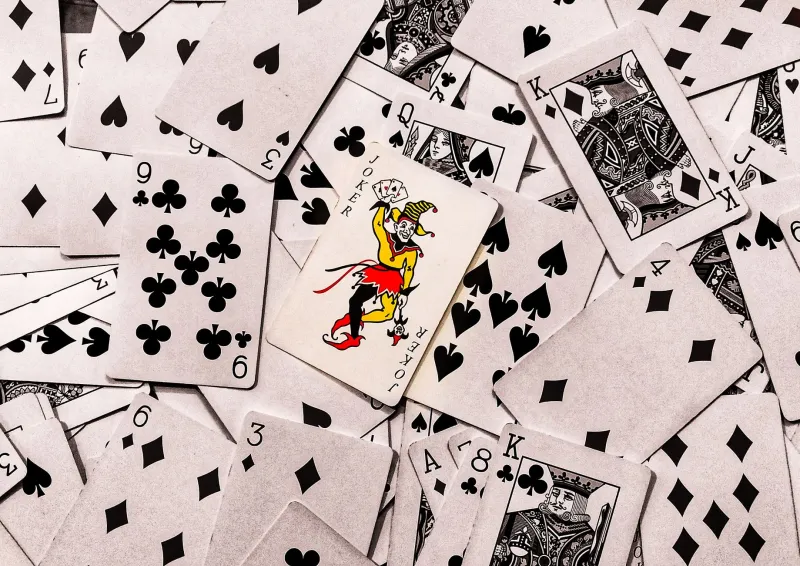
But here's the thing the Joker already knows — and has always known — that most players are still figuring out: the biggest variable in any casino session isn't the RNG, the house edge, or even the size of your deposit. It's the six inches between your ears.
Emotional intelligence — the ability to recognise, understand, and manage your own psychological responses — is quietly becoming the defining trait of Australia's sharpest online casino players. And if you're still relying purely on probability calculations to guide your sessions, you're playing with a hand that's missing a few cards.
The Maths Is Honest. Your Brain Isn't.
Let's be clear about one thing upfront: probability isn't useless. Knowing that a pokie with 96% RTP returns more over time than one sitting at 88% is genuinely valuable information. Understanding variance helps you set realistic session expectations. These things matter.
But here's where the wheels fall off for most players. Maths is static. It doesn't care that you've just had a brutal week at work, that your footy team got flogged on the weekend, or that you're three drinks deep on a Friday night. The numbers stay the same regardless of your emotional state. Your decision-making, however, absolutely does not.
Research into the psychology of gambling consistently shows that emotional arousal — whether positive or negative — distorts risk perception. When you're frustrated after a string of losses, the brain starts hunting for a way to "fix" the situation, often by escalating bets in ways that no rational probability calculation would ever endorse. When you're riding high after a big win, overconfidence kicks in and suddenly you're treating a hot streak like a guaranteed trajectory rather than a random fluctuation.
The house edge doesn't change in either scenario. But your behaviour does — and that's where the real money gets lost.
Frustration Thresholds: The Leak You Didn't Know You Had
Every player has a frustration threshold — a point at which a run of bad luck stops feeling like variance and starts feeling personal. The Joker, being the chaotic little gremlin he is, loves this moment. Because that's precisely when rational play goes out the window.
For some players, the threshold kicks in after three consecutive losses. For others, it's more like ten. The number itself is less important than the pattern that follows: shortened decision windows, increased bet sizes, a stubborn refusal to walk away, and a creeping conviction that the next spin is somehow "owed" to you.
Sound familiar? You're not alone, and you're not weak. This is a deeply human response. The problem is that online casino games are specifically not set up to reward emotional reactions. They respond to maths, not feelings.
The fix isn't to become a robot. It's to know your own threshold well enough to catch yourself before you cross it. Keep a simple session log — even just mental notes — about how you feel when you start a session versus how you feel at various points during it. Frustrated, flat, antsy, restless? Those are signals, not just moods. They're your brain telling you that the quality of your decisions is about to take a nosedive.
Celebration Overconfidence: The Sneaky One
Frustration is obvious. Overconfidence after a win is sneakier, and arguably more dangerous, because it feels so good.
Here's the scenario: you've just landed a solid bonus round, your balance is looking healthy, and there's a warm glow of validation washing over you. Clearly, you're reading the game well. Clearly, you've got something figured out. Clearly, now is the time to push your luck a little further.
Except that glow? That's dopamine, not data. The game has no memory of your last win. The RNG doesn't know or care that you're feeling invincible. But your brain has just quietly inflated your risk tolerance and convinced you that your judgement is sharper than it was twenty minutes ago.
The smartest Aussie players treat a significant win as a natural pause point — a moment to take stock, not a green light to accelerate. Locking in a portion of winnings before continuing is less about rigid strategy and more about protecting yourself from your own enthusiasm. The Joker giveth, and the Joker taketh away. Don't hand it back with a bow on it.
Fatigue: The Silent Session Killer
There's a reason the big decisions in life — career moves, relationship conversations, major purchases — are rarely best made at 1am after a long day. Cognitive fatigue is real, measurable, and absolutely present during late-night gaming sessions.
Fatigue narrows your attention, slows your processing speed, and — critically — weakens your impulse control. The part of your brain that normally pumps the brakes on a questionable bet is running on empty. What feels like a considered decision at that hour is often just tiredness wearing a waistcoat.
This is one area where Aussie players who treat their online sessions with the same respect they'd give any leisure activity they care about tend to consistently outperform those who treat it as a mindless wind-down ritual. Set a time limit before you start, not after you're already bleary-eyed and three sessions deep. Your future self will thank you.
Building Your Psychological Edge
So what does emotionally intelligent play actually look like in practice? A few habits that genuinely move the needle:
Pre-session check-ins. Before you load up the lobby, give yourself an honest thirty-second assessment. Are you stressed, tired, or emotionally wound up about something else entirely? If yes, that's not a reason you can't play — but it is information you should carry into the session.
Identifying your personal triggers. Not every player tilts the same way. Some chase losses aggressively; others go passive and stop making optimal decisions. Neither is better or worse — but knowing your pattern means you can watch for it.
Defining exit conditions in advance. Not just loss limits — win limits too. Decide before you start what a successful session looks like, and be willing to call it a win when you get there. Greedy is the Joker's favourite flavour.
Separating session outcomes from self-worth. A losing session is a losing session. It's not a verdict on your intelligence, your luck, or your value as a human being. The players who recover quickly from bad runs are usually the ones who never attached too much meaning to them in the first place.
The Joker's Real Lesson
The Joker has always been the wildcard — unpredictable, chaotic, impossible to fully anticipate. That's the nature of casino gaming, and no amount of probability theory will change it.
But here's what the Joker actually respects: a player who knows themselves. Who understands their own patterns, honours their own limits, and refuses to let a bad beat or a euphoric win scramble their thinking.
The maths is the maths. Everyone has access to the same RTP figures and volatility ratings. The real differentiator — the genuine edge that separates the players who walk away satisfied from those who wonder where the night went — is the ability to manage what's happening inside your own head.
At JokaRoom, the games are wild, the fun is real, and the Joker deals to everyone equally. What you do with that hand is entirely, wonderfully, up to you.