Hit Pause, Play Better: The Secret Weapon Aussie Casino Players Are Hiding in Plain Sight

There's a particular kind of stubbornness that every Australian punter knows intimately. It's that chin-forward, arms-crossed refusal to step away from a session that's going sideways — or, just as dangerously, one that's going brilliantly. We're a nation of people who'll stand in the blazing Queensland sun rather than admit we need a cold drink and a sit-down. And at the tables, that same stubbornness can cost us.
But here's where it gets interesting. A growing cohort of sharp Aussie players aren't talking about walking away. They're talking about something far more surgical: the intentional mid-session pause. Not a retreat. Not a white flag. A deliberate recalibration — the gaming equivalent of pulling into a servo, checking the map, and getting back on the highway with fresh eyes.
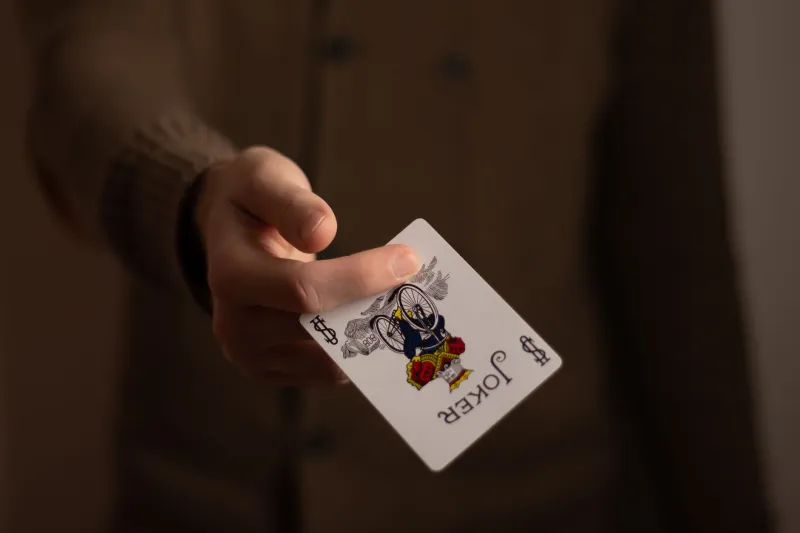
The Joker, as any card player knows, changes the value of everything around it. And for these players, the pause is the wild card.
The Difference Between Stopping and Resetting
Let's clear something up straight away, because it matters. A mid-session reset is not the same as calling it a night. Plenty of guides will tell you to walk away when you're losing — and sure, that's solid advice in its own right. But what we're talking about here is something different: a planned interruption within a session, taken not necessarily because things are going wrong, but because you want to make sure they keep going right.
Think of it like a footy team taking a time-out. The scoreboard might be in your favour, but the coach still pulls the players in, refocuses the group, and sends them back out with a clearer game plan. Nobody calls that quitting.
Darren, a 34-year-old from Adelaide who's been playing online pokies and live dealer games for about five years, describes it this way: "I used to just grind straight through. Two hours, three hours, whatever. Then I started noticing that my decisions in the last hour were almost always worse than in the first. I wasn't tired exactly — I just wasn't sharp. Now I set a timer. Forty-five minutes on, ten minutes off. It sounds rigid, but it's made a massive difference to how I feel at the end of a session."
Darren isn't alone. And the psychology backs him up.
What's Actually Happening in Your Brain
Decision fatigue is a well-documented phenomenon — the idea that the quality of our choices degrades the more decisions we make in a row. It's why judges give harsher rulings before lunch, why you end up buying chips at the servo when you only went in for a water. Your brain's executive function — the part responsible for weighing options, resisting impulse, and thinking ahead — is not an infinite resource.
In a casino context, this is particularly treacherous. Every spin, every hand, every choice about whether to increase a bet or hold steady is drawing from that same well. And the emotional texture of gambling — the near-misses, the wins that feel like they should've been bigger, the losses that sting — accelerates the drain.
A deliberate pause interrupts that cycle. It gives your prefrontal cortex a chance to reassert itself over the more reactive, impulsive parts of your brain that tend to take the wheel when you're deep in a session and running on fumes.
Melbourne-based player Priya, 28, puts it more simply: "I go make a cup of tea. Genuinely. I stand in my kitchen, I make tea, I look out the window for a bit. When I sit back down, it's like I've opened a new tab. Everything feels cleaner."
The Danger Zones: When a Pause Is Most Valuable
Not all moments in a session are equal. Experienced players tend to identify a few key inflection points where a reset is particularly valuable.
After a significant win. Counter-intuitive, but crucial. A big win triggers a dopamine surge that can make you feel invincible — which is precisely when you're most likely to start making reckless decisions. A pause here isn't about dampening the excitement; it's about making sure that excitement doesn't write cheques your bankroll can't cash.
After a rough run. The classic tilt scenario. You've taken a few hits in a row, and now you're chasing. The urge to 'get it back' is primal and powerful and almost always leads somewhere worse. Stepping away — even for ten minutes — can break the emotional momentum before it breaks your session.
When you notice you're not really present. This one's subtle. You're still clicking, still spinning, but you're kind of... elsewhere. Your mind's drifted to something else, or you're watching TV with one eye. If you're not actually engaged, you're not making considered decisions — and that's when mistakes happen quietly.
Tom, a 41-year-old from Brisbane who describes himself as "a casual player who takes it more seriously than most casuals," has a personal rule: "If I catch myself thinking about something unrelated to the game three times in a row, I stop and reset. Doesn't matter where I am in the session. It means I've checked out, and I need to check back in before I keep going."
Building a Reset Ritual That Works for You
The beauty of this approach is that it's entirely personal. There's no universal script — just the principle that the pause needs to be intentional and genuinely restorative, not just a longer scroll through your phone.
Some players swear by physical movement: a quick walk around the block, some stretches, even just standing up and moving to a different room. Others prefer something mindless and calming — a few minutes of music, a bit of fresh air on the balcony. The point is to genuinely disengage, not just swap one screen for another.
A few practical approaches worth considering:
- Set a timer before you start, not when you feel like you need a break. Reactive pauses are less effective than planned ones.
- Keep a simple session log — even just jotting down how you feel before and after a reset can reveal patterns over time.
- Make the reset environment different from your gaming environment. If you play at your desk, don't just spin in your chair and call it a break.
- Don't use the pause to review your losses. That's not resetting — that's ruminating. Give your brain something genuinely neutral to do.
The Wild Card You Actually Control
Here at JokaRoom, we reckon the Joker's always been about unpredictability — about changing the game when you least expect it. But the sharpest players know that sometimes the biggest wild card isn't in the deck. It's the choice to step back, breathe, and return to the table as a cleaner, calmer, more intentional version of yourself.
You can't control the RNG. You can't bend volatility to your will. But you can control the quality of your own thinking — and in a game where the margins matter, that's not nothing. That's actually quite a lot.
So next time you're deep in a session and feeling the fog roll in, maybe the sharpest play isn't the next spin. Maybe it's the kettle.