Throw 'Em Off the Scent: Why Aussie Players Are Betting Weird on Purpose
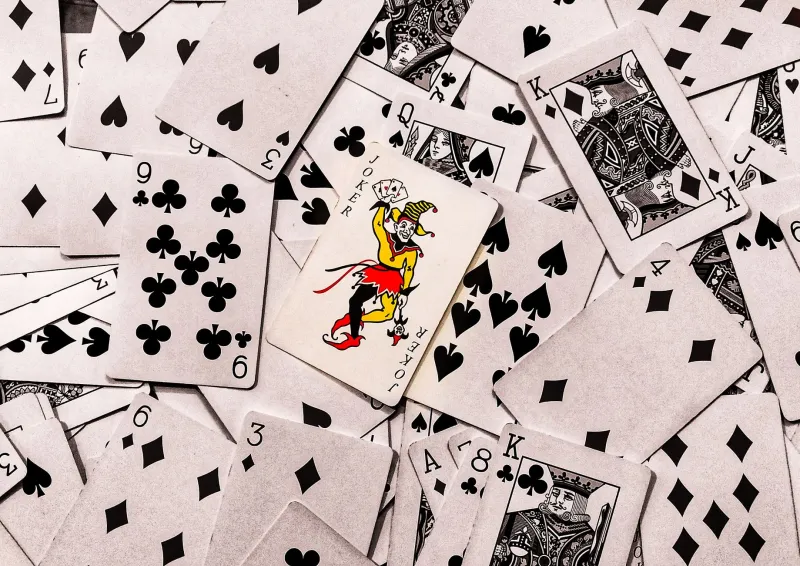
There's a certain kind of Aussie casino player who, mid-session, will suddenly drop from a $10 bet to $1.50 for absolutely no apparent reason. Not because they're nervous. Not because they've lost the plot. But because, as one regular JokaRoom player put it, "I like keeping things confused — including myself."
It sounds mad. It might be a little mad. But there's a growing school of thought among sharp Australian online players that deliberate unpredictability isn't just a quirk — it's a legitimate strategic layer worth adding to your game.
Pull up a chair. This one gets interesting.
The Algorithm Question Nobody Wants to Ask Out Loud
Here's the thing about online casino software: it runs on systems, and systems, by definition, look for patterns. Now, before anyone gets their tin foil hat out — no, the games aren't rigged against you specifically, and RNG (Random Number Generator) certification exists for very good reasons. But that doesn't mean your own behaviour isn't patterned in ways that affect your outcomes.
When you play the same pokie at the same bet size, session after session, you're essentially handing the house a script. You become predictable. And predictable players, whether against software or other humans, tend to get read like a large-print novel.
The counterintuitive insight some Aussie regulars have landed on? If you're going to lose ground over time to house edge (and statistically, you will), at least make the ride genuinely unpredictable — for the game, and for yourself.
What "Calculated Chaos" Actually Looks Like
Forget wild, reckless swings. That's just panic with extra steps. What we're talking about is structured randomness — a deliberate approach to varying your bets in ways that don't follow any obvious rhythm.
A few methods players have described:
The Dice Roll Reset: Before a session, roll a physical die (yes, an actual die — old school, love it) to determine your starting bet multiplier. If you normally play at $5, a roll of three means you open at $15. A roll of one means $5. The point isn't the number — it's that you didn't decide it.
The Reverse Ladder: Instead of increasing bets after wins (the classic escalation trap), some players deliberately decrease their bet by a random increment after a win and increase slightly after a loss — the opposite of what instinct screams. It messes with your own psychology as much as anything else, which turns out to be the whole point.
The Cold Swap: Mid-session, without any trigger event, switching games entirely. Not chasing a hotter machine — just breaking the pattern for the sake of breaking it. Players who do this report it resets their mental state as much as their betting rhythm.
None of these are guaranteed to move the mathematical needle. But they do something arguably more valuable: they interrupt the autopilot mode that causes most players to bleed out slowly without noticing.
The Psychology Behind Playing Unpredictably
Here's where it gets genuinely fascinating. Sports psychologists and behavioural economists have long noted that humans are terrible at generating true randomness. Ask someone to write down a random sequence of numbers and they'll unconsciously avoid repeating digits, create false variety, and follow patterns they don't even realise they're making.
Online casino players do the same thing. They bet in rhythms. They escalate predictably. They chase with recognisable emotional signatures — bigger bets, faster clicks, less consideration between spins.
What the "weird bettors" are really doing is fighting their own cognitive defaults. By introducing external randomness — a die roll, a timer, a rule they invented at breakfast — they're outsourcing some decisions to something that genuinely doesn't have an emotional state.
The result? Fewer tilt spirals. Less chasing. A session that feels more like play and less like a slow-motion train wreck.
A Word From the Weirdos Themselves
We spoke to a handful of regular JokaRoom players (names changed, obviously — these are people with dignity) about their most counterintuitive winning sessions.
One Sydney-based player described a night where he'd decided, entirely arbitrarily, to only bet in prime numbers. "It was stupid," he admits cheerfully. "But I was so focused on calculating the next prime that I forgot to get emotionally invested in individual spins. Best session I'd had in months."
A Brisbane player swears by what she calls the "weather bet" — checking the Bureau of Meteorology before a session and using the forecast temperature as her base bet in cents. Twenty-eight degrees? $0.28 per line. It's nonsense, she acknowledges, but it gives her a starting point that isn't emotionally loaded.
"The moment I stopped deciding my bets based on how I felt about the last spin," she says, "everything got calmer."
The Line Between Smart Chaos and Just Chaos
Let's be straight: none of this changes the underlying mathematics. House edge is house edge. RTP is RTP. If you're playing a pokie with a 94% return rate, no amount of creative betting will turn it into a 99% machine.
What structured unpredictability can do is protect you from the psychological traps that accelerate losses — tilt, chasing, escalation spirals, and the insidious "just one more" logic that sees players blow their session budget in the final ten minutes.
The wild card isn't in the game. It's in you.
At JokaRoom, we're big fans of players who approach the tables with a bit of wit and a lot of self-awareness. The Joker, after all, doesn't play it straight — and neither should you.
Just, you know, set your limits first. Then go beautifully, deliberately weird.